
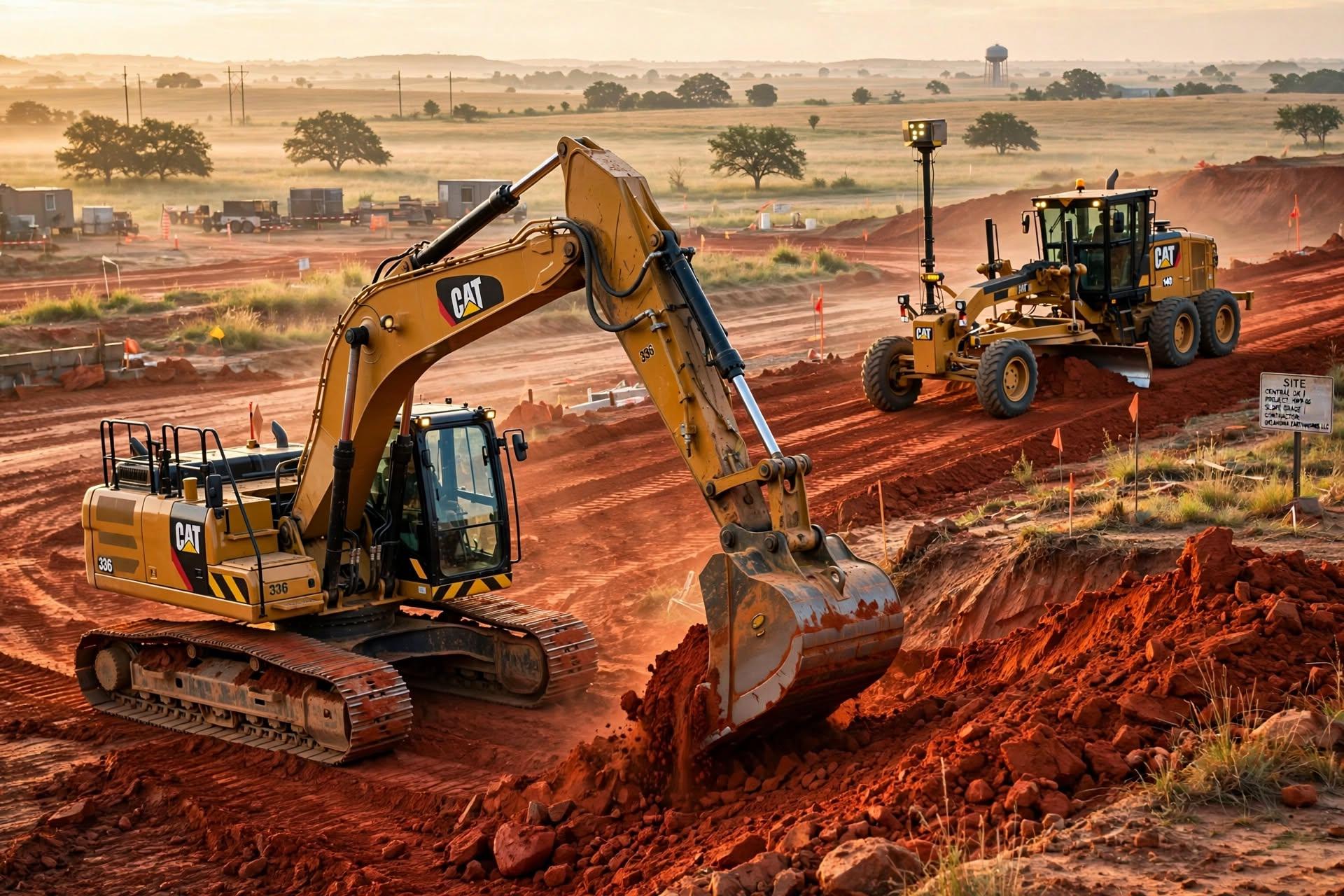
Building a structural project in Central Oklahoma—whether a custom home in Yukon, a commercial facility in Edmond, or a residential workshop in Mustang—begins long before concrete trucks arrive on location. The true backbone of any lasting structure lies directly beneath the ground. Central Oklahoma features unique soil dynamics, weather patterns, and land profiles. Skipping or rushing initial site work causes shifting foundations, standing surface water, cracked driveways, and costly structural repairs down the road.
Navigating site preparation requires clear steps, specialized heavy machinery, and an understanding of regional dirt work conditions. Partnering with experienced professionals like Design Earth Contracting ensures your project moves from raw land to a stable, build-ready foundation efficiently and safely.
Understanding Central Oklahoma’s Red Clay and Topography
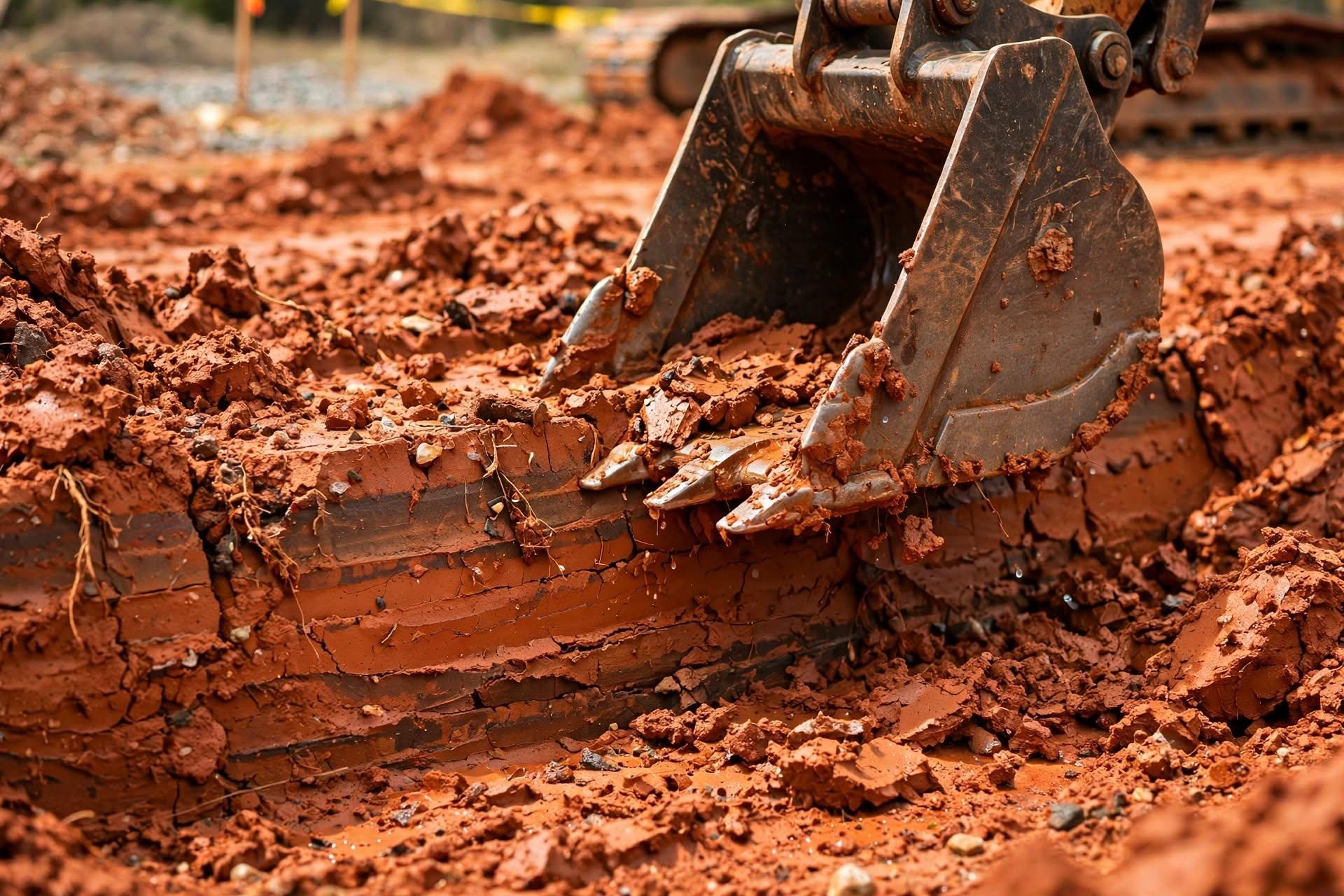
Anyone who has worked ground in Oklahoma City, Norman, or surrounding rural areas understands our distinct native red clay. While rich in color, this soil presents notable challenges for structural civil work:
High Shrink-Swell Potential: Clay expands significantly when saturated with water during heavy rain cycles and shrinks drastically during summer dry spells.
Slow Percolation: Water drains poorly through dense clay, leaving surface pooling unless correct grading paths are formed.
Compaction Requirements: Raw native topsoil cannot support foundation weight without proper stripping, moisture adjustment, and structural fill compaction.
Preparing a site in OKC demands targeted land clearing, precise soil excavation, controlled structural dirt placement, and engineered drainage slopes.
Phase 1: Land Clearing and Stump Demolition
Before heavy earthmoving equipment shapes your property, the building footprint must be cleared of native vegetation, trees, overgrown brush, and existing subsurface obstructions.
Brush Clearing vs. Tree and Stump Demolition
Clearing brush often includes removing brush and small trees such as dense scrub oak, eastern red cedar, weeds, and thick vegetation. However, tree removal requires full root extraction. Leaving tree stumps or root balls buried under house pads or driveways leads to future settling issues as buried wood rotted over time.
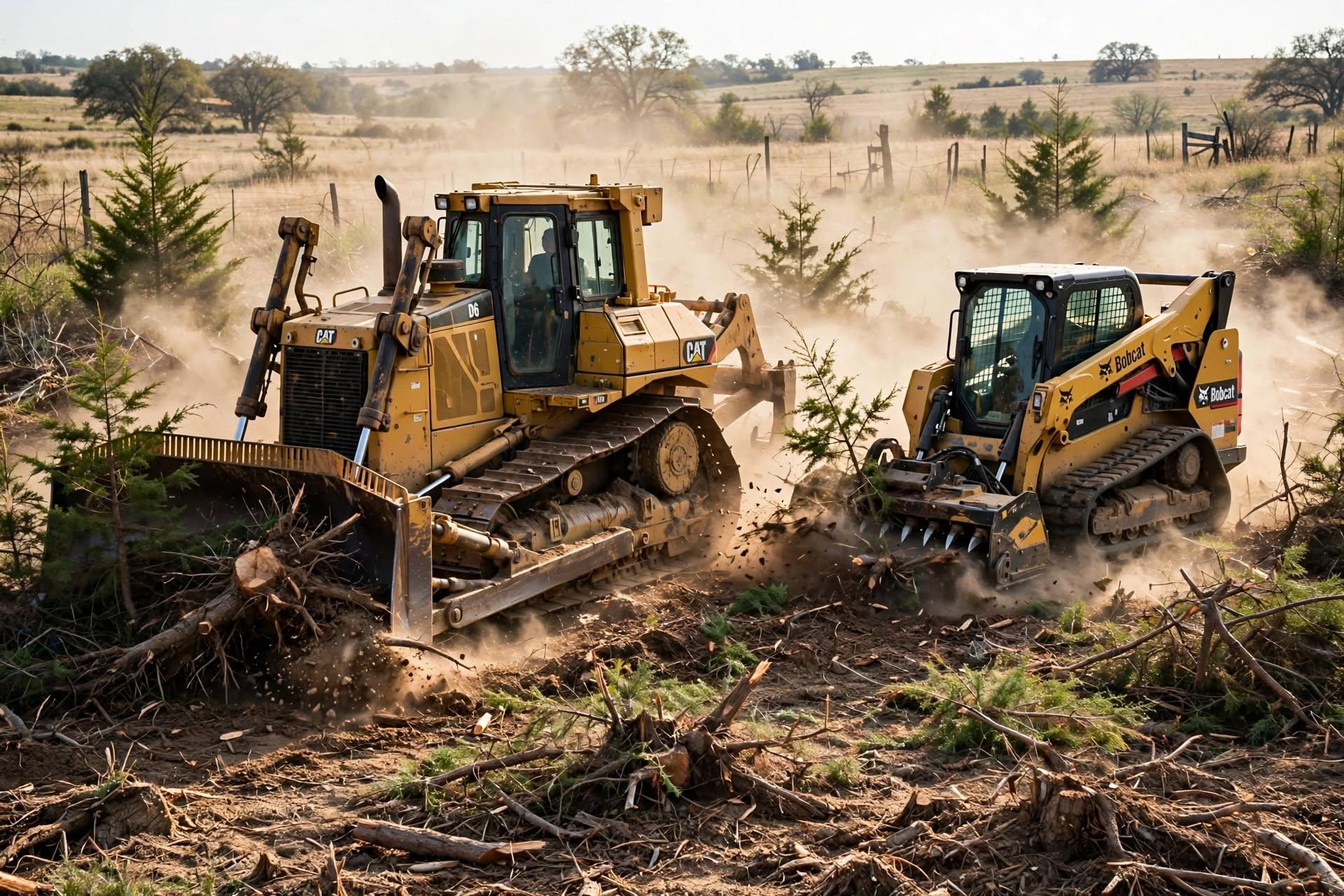
Forestry Mulching: Efficient for selective brush clearing, underbrush clearing, and creating perimeter access paths without disrupting healthy soil layers or requiring hauling away debris. Forestry mulching is typically faster and cleaner than traditional clearing methods.
Bulldozer and Excavator Grubbing: Required for full building pad footprints. Excavator thumbs and heavy rippers yank out deep taproots, ensuring subgrade dirt stays free of organic material.
Stump Demolition and Land Clearing: Heavy machinery breaks down mass tree bases and extracts root balls entirely to avoid future ground sinkholes.
Commercial vs. Residential Clearing Requirements
Residential land clearing in Yukon or Mustang typically focuses on clearing house lots, outbuilding footprints, yards, and short driveway corridors. Residential lot clearing often falls in the $2,000 to $4,000 range, depending on vegetation and access. Commercial land clearing in Edmond or Oklahoma City involves multi-acre clearing, hauling or haul-off operations, strict erosion control measures, and extensive tree preservation boundaries dictated by local municipal codes.
Phase 2: Professional Dirt Excavation and Trenching
Once vegetation and organic topsoil are cleared and stockpiled, mass excavation begins to create open spaces, trenches, or hollow cavities as needed for the project. Excavation techniques include open-cut, trenching, dredging, borrow excavation, and underground excavation. A careful approach to method selection focuses on soil conditions, project constraints, and specific challenges, since the method chosen affects timeline, budget, structural integrity, and environmental safety. Professional dirt excavation OK operators move earth to establish exact design elevations.
Foundation Excavation and Utility Trenching
Building footprints require cut-and-fill operations tailored to site-specific foundation conditions. High points are excavated, and low areas are filled with engineered select dirt placed in compacted layers.
Foundation Cuts: Excavating footings, grade beams, and basement pads to exact structural specs.
Pad Stabilization: Using soil stabilization techniques such as blending sand, crushed stone, or structural clay to create a uniform foundation base and support long term stability.
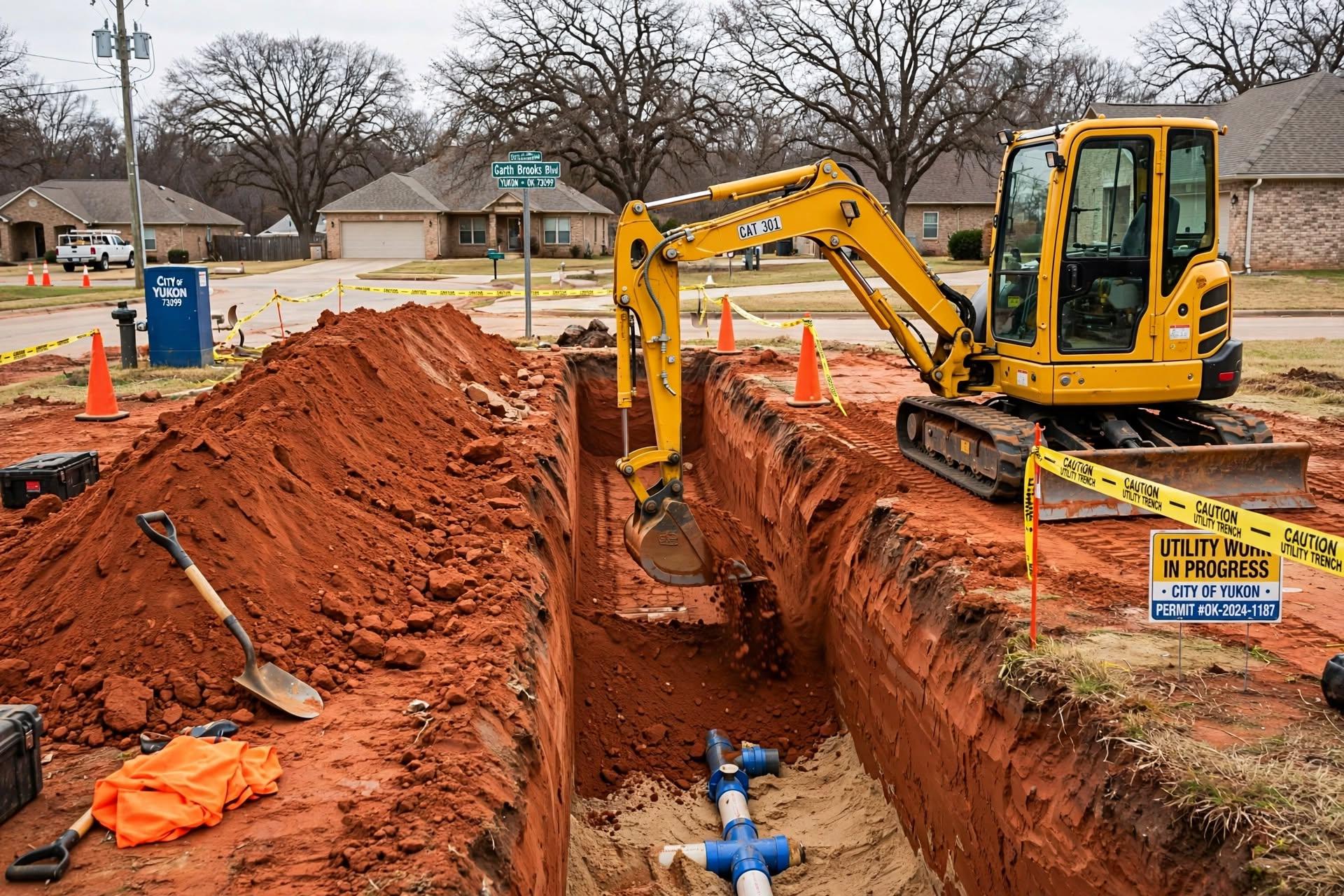
Trenching Operations: Digging stable, straight utility corridors for plumbing, electrical conduit, gas, and storm runoff lines.
Underground Utility Installation in OKC Metro
Safe utility trenching requires proper excavation safety protocols, wall sloping, or trench boxes depending on trench depth and soil moisture. Modern projects utilize trencher services and compact excavators equipped with precision buckets to lay underground utility services cleanly without disturbing adjacent native soil profiles.
Phase 3: Laser Grading, Drainage, and Slope Optimization
Moving dirt creates the basic footprint, but precision finish grading controls runoff, helps prevent structural issues at foundations, and establishes proper drainage to avoid water pooling during intense Oklahoma rainstorms. This helps homeowners understand what to expect, because skipping proper site preparation often leads to expensive post-construction fixes.
Rough Grading vs. Finish Grading Services
Rough Grading: The process of shaping the overall property contour, cutting main drainage swales, and constructing building pads to within a few inches of final height.
Finish Grading Services: The final surface shaping stage, removing small rocks, smoothing subgrade soil, and creating a level surface around pads and adjacent hardscape areas while setting precise fractions-of-an-inch runoff slopes to direct rainwater away from structural foundations.
Oklahoma Laser Grading Solutions for Water Management
Modern earthmovers use GPS and Oklahoma laser grade technology to ensure accuracy across vast land areas. Laser receivers mounted on skid steers, motor graders, and box blades allow operators to establish smooth, uniform slopes quickly.
Proper slope grading in Oklahoma City directs runoff away from foundations during heavy rain and protects patios, driveways, and asphalt surfaces from standing water damage, while improper grading can leave water pooling near foundations and along structural boundaries.
Phase 4: Concrete Work and Surface Installation
Excavation and subgrade preparation lead directly to durable concrete pouring. Whether installing a new commercial parking area, house pad, or custom back patio, the lifespan of poured concrete depends directly on the base underneath.
Preparing the Subgrade for Long-Lasting Concrete
Pouring concrete directly over uncompacted, uneven native red clay and poor soil compaction causes rapid cracking, surface sinking, and structural failure. Professional site setup includes:
Excavating down to solid subgrade soil depth.
Compact native subsoil to standard density requirements.
Importing and spreading crushed aggregate stone to form a stable base.
Setting forms using laser levels to maintain accurate thickness and slope, with proper grading under the slab helping prevent structural issues in foundations.
Concrete Driveways, Patios, and Flatwork in OKC
Once subgrade preparation is complete, proper concrete installation requires setting correct expansion joints, applying reinforcement rebar patterns, and selecting appropriate concrete mix designs for high heat or winter freeze-thaw cycles. Combining expert earthwork with skilled concrete finishing, along with proper base prep and drainage, helps protect adjacent structures and flatwork from movement, cracking, and water damage.
Local Considerations for OKC, Yukon, Mustang, Edmond, and Norman
Site preparation varies across central Oklahoma communities due to distinct local rules, terrain, and soil conditions:
Oklahoma City (OKC): Requires strict storm-water runoff management, sediment fencing, and utility location clearance prior to excavation start dates.
Yukon & Mustang: Often feature high clay content and low-lying topography, and Yukon’s weather can swing from dry spells to severe thunderstorms, so earth excavation for residential projects requires the right equipment, laser-guided ditching, swale construction, select fill dirt for structural pads, and attention to local drainage patterns.
Edmond: Known for rolling hills, dense oak trees, and sandy-clay soil mixes. Demands heavy land clearing, root grubbing, and slope stabilization to prevent erosion.
Norman: Mixes river bottom silt near water courses with tight native clay higher up, making moisture testing and subgrade compaction vital for slab performance.
Frequently Asked Questions About Site Prep and Excavation
Why is native red clay so difficult to build on in Central Oklahoma?
Red clay expands when wet and shrinks when dry. Without proper excavation, soil replacement, or stabilization, clay movement causes concrete slabs, footings, and driveways to crack and shift.
What is the difference between land clearing and site grading?
Land clearing removes trees, brush, stumps, and surface debris from the property. Site grading shapes the land surface, levels building pads, and creates drainage slopes for water control, helping you understand what to expect from pad leveling and drainage shaping.
How deep should utility trenches be dug in Oklahoma City?
Utility trench depths depend on local building codes and the utility line type. Water lines typically require deeper burial (at least 24 to 30 inches) to protect against frost, while electrical lines vary based on conduit specifications.
Why is laser grading better than traditional visual grading?
Laser grading uses precise light-beam receivers to guide machine blades automatically. This eliminates human error, ensures accurate slope ratios across large spaces, and prevents standing water problems around foundations.
How do I get an estimate for excavation work?
Please contact our team to schedule a site walk before pricing. A property walk-through helps us assess access, soil conditions, and scope so the estimate is accurate.
Frequently Asked Questions About Design Earth Contracting
What geographic areas does Design Earth Contracting cover?
Design Earth Contracting serves the entire Oklahoma City metropolitan area and surrounding communities within a 50-mile radius, including Yukon, Mustang, Edmond, Norman, Moore, Piedmont, and El Reno.
What services does Design Earth Contracting provide?
Design Earth Contracting handles land clearing, brush removal, stump demolition, dirt excavation, rough and finish laser grading, utility trenching, pad construction, site prep, and structural concrete flatwork.
Does Design Earth Contracting handle both residential and commercial projects?
Yes. Design Earth Contracting works on residential projects for single-family homeowners and farm owners, as well as commercial work for developers and general contractors across central Oklahoma.
How can I get an estimate for my land clearing, excavation, or concrete project?
You can request a free, no-obligation estimate with no initial commitment required by visiting designearthexcavation.com or calling our direct team line. Contact the team today to discuss site specifics, timelines, and equipment needs.
About the Author & Design Earth Contracting
Design Earth Contracting is a premier earthmoving, excavation, site preparation, and concrete services contractor based in Oklahoma. Built on decades of hands-on field experience, our team brings local dirt work knowledge, modern machinery, and laser-guided accuracy to every job site in Central Oklahoma.
Our field crew specializes in solving tough site challenges from clearing overgrown brush and timber in Edmond to preparing stable building pads in red clay areas like Yukon and Mustang. By combining structural excavation expertise with precision concrete installation, Design Earth Contracting gives land owners, home builders, and commercial developers a reliable partner from ground clearing through final flatwork.
Final Thoughts
Every durable building, smooth driveway, and dry property layout starts with proper ground prep. Cutting corners on land clearing, subgrade compaction, or laser grading leads to costly foundation and surface drainage repairs.
By taking the right steps clearing trees thoroughly, excavating to stable ground layers, installing utility runs correctly, and shaping subgrades with modern laser technology you protect your investment for decades to come. When you are ready to transform your site from raw dirt into a build-ready location, working with experienced local specialists like Design Earth Contracting makes all the difference.